This weekend brought a painful reminder for every working photographer. At the Formula 1 Mexico Grand Prix, a photographer left his camera bag in the media center for about five minutes. When he came back, the bag felt light. Two Canon R1 bodies and several lenses were gone, a loss of roughly 30,000 USD.
It is a story from a racetrack in Mexico City, but the lesson applies to every conference hall, hotel ballroom and venue in San Antonio. Here is what happened, why it happened, and how we think about protecting gear (and your event coverage) at busy events.
What happened in Mexico City
According to PetaPixel’s November 2 report, which draws on an account from F1 photographer Kym Illman:
- The media center was still being set up. Tradespeople were running wiring and dealing with flooding in the press room, so there was a lot of activity and a lot of unfamiliar faces.
- The thieves blended in. Security cameras showed two men who looked like they were installing wiring under the desks. They were actually going through the camera bag.
- It took about five minutes. Several photographers had dropped their bags in the room before stepping out. Only one came back to an empty bag.
- It is not the first time. Illman notes earlier thefts at other F1 circuits, including emptied lockers, a stolen long lens and camera straps being cut.
The takeaway Illman shared is a good one: a familiar working space does not make unattended equipment safe.
Why event setup is the riskiest time
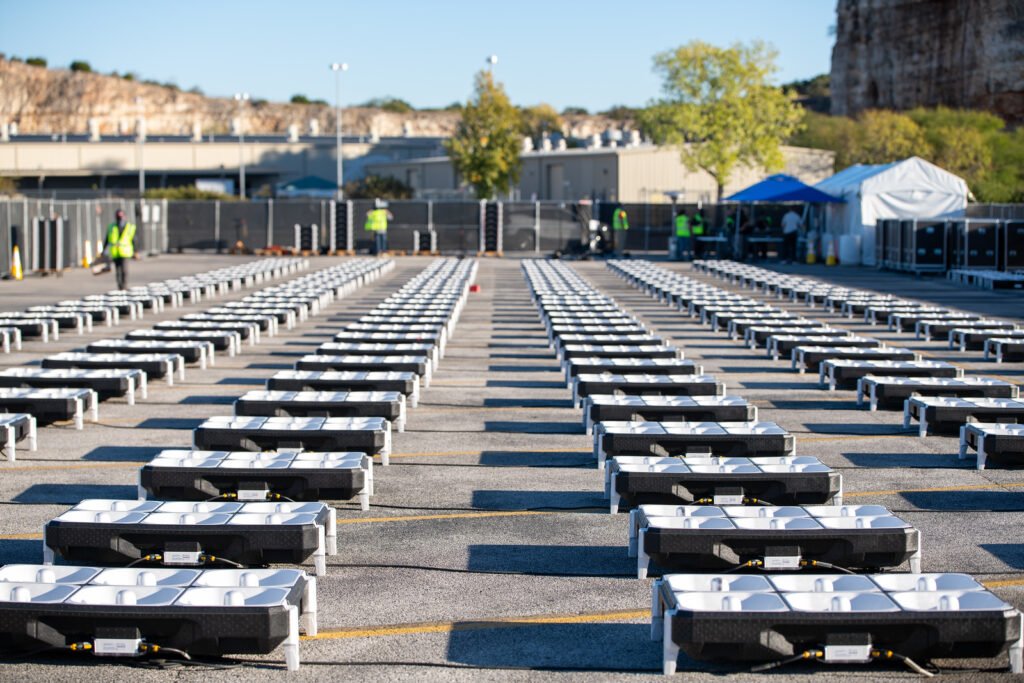
Look at the photo at the top of this post. That is setup day for a drone light show here in San Antonio: hundreds of cases, open tents, crews in vests moving in every direction. Corporate events look the same before doors open. AV teams, caterers, decorators and vendors all come and go, doors get propped open, and everyone assumes the person carrying a box belongs there.
That is exactly the cover the Mexico City thieves used. Chaos is normal during setup, so nobody questions it.
How a working event photographer protects gear
Grey Bug Photography has shot events and headshots with the Nikon Z9 and Z8 since they launched. Bodies and lenses like that are expensive, but the bigger worry is losing the memory cards, because those hold images that can never be reshot. These are the habits we rely on:
- Never leave a bag unattended, even “for a minute.” If it cannot come with you, it goes in a locked room or locker, or someone you trust watches it.
- Keep the essentials on your body. Cameras on a harness or strap, spare cards and batteries in a pocket or belt pouch, not in an open bag under a table.
- Protect the images first. Dual card slots recording to both cards, swapping and securing full cards during the event, and backing up as soon as possible after the shoot.
- Use a case that locks. A rolling case with lockable zippers and a cable lock will not stop a determined thief, but it turns a five-second grab into something much harder.
- Know the room. Ask the event planner where the secure staging area is, who has keys, and when the room is staffed.
- Insure and document your kit. Keep serial numbers and receipts on file and carry proper equipment insurance, so a theft does not end a business.
For more ideas, our older guide on protecting your photography equipment covers storage, travel and insurance basics.
If you are looking for a lockable rolling case, Think Tank’s Airport Security line is a long-time favorite with event photographers: see Think Tank Airport Security rolling cases at Adorama. You can also browse camera bag cable locks at Adorama.
Disclosure: some links in this post are affiliate links, which means Grey Bug Photography may earn a small commission if you buy through them, at no extra cost to you.
Tips for San Antonio event planners
You can help your photographer (and every other vendor) keep gear safe, which also protects your event coverage:
- Offer a lockable staging room or a staffed area where vendors can store cases during the event.
- Badge vendors and crew so it is easy to tell who belongs behind the scenes.
- Watch the setup window. Have someone from your team or venue staff present while doors are propped open and vendors are loading in.
- Share the schedule early. When your photographer knows load-in times and breaks, they can plan when gear is packed, locked or carried.
- Ask about backups. A professional photographer should be able to tell you how your images are protected if something goes wrong.
The bottom line
The Mexico Grand Prix theft took five minutes in a room full of professionals. It is a reminder that gear security is part of doing the job well, not an afterthought. If you are planning a conference, summit, corporate event or team headshot day in San Antonio, reach out to Grey Bug Photography. We will plan the coverage, the logistics and the backups so your images are safe from the first frame to final delivery.