Nikon announced the NIKKOR Z 120-300mm f/2.8 TC VR S today, October 29, 2026, and it is a big one. Nikon calls it the world’s first telephoto zoom that keeps a constant f/2.8 aperture and also has a teleconverter built into the lens. Flip a switch and the 1.4x converter drops in, turning it into a 168-420mm f/4 without taking the lens off the camera.
It is clearly built for pro sports, but we shoot events and headshots on the Nikon Z9 and Z8, so we wanted to look at what this lens means for people who work in conference halls, arenas and outdoor venues rather than on an NFL sideline.
What Nikon announced
- Focal range: 120-300mm at f/2.8, or 168-420mm at f/4 with the built-in 1.4x teleconverter engaged.
- Weight: about 2,735 g (roughly 6 lb). Nikon says that is around 515 g lighter than the F-mount AF-S 120-300mm f/2.8E it replaces, even with the converter inside.
- Autofocus: Silky Swift voice coil motors (SSVCM) with a new control algorithm meant to keep up with the fastest continuous shooting rates on bodies like the Z9 and Z8.
- Stabilization: up to 6.5 stops of Vibration Reduction with Synchro VR, according to Nikon’s CIPA testing.
- Handling: internal focusing and internal zoom, so the lens does not change length. It has a rotating, removable tripod collar with an Arca-Swiss compatible foot.
- Filters: a 112mm front thread plus a 46mm slip-in filter holder at the rear.
- Build: magnesium alloy with weather sealing and a fluorine-coated front element, with Meso Amorphous and ARNEO coatings to fight flare.
- Price and timing: Nikon’s suggested price is $13,999.95, with availability expected in mid-November 2026.
Why event photographers should pay attention
Most of our corporate and summit work happens on a 24-70mm and a 70-200mm. That pair covers most of a typical day. The moments when it falls short are where a lens like this earns attention:
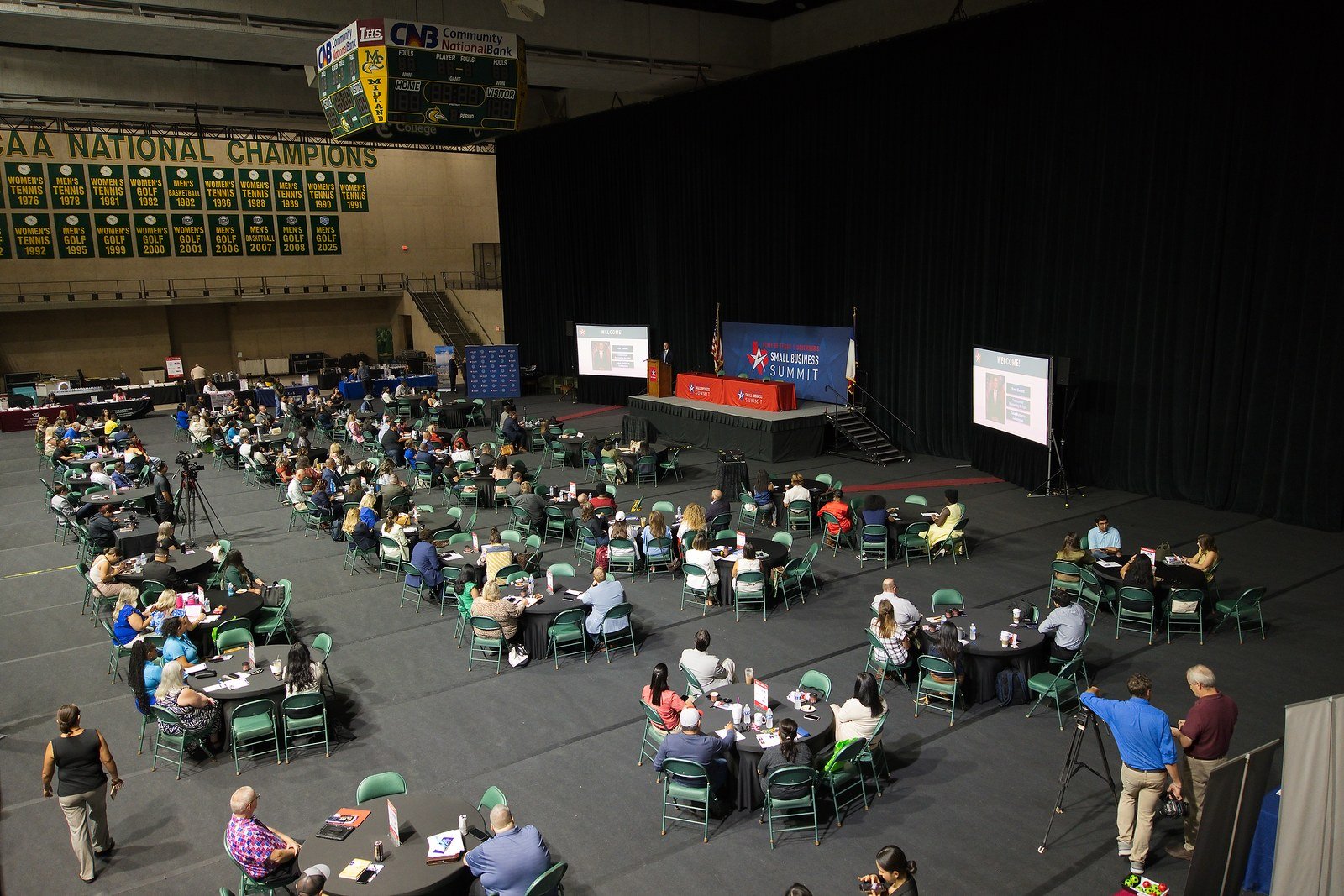
- Keynotes from the back of the room. In big halls and arenas, the spot where you can stand without blocking attendees is often far from the stage. A 200mm can leave the speaker small in the frame. Having 300mm at f/2.8, and 420mm at f/4 with a flick of the switch, means a tight podium shot without walking down the aisle.
- Dim rooms. Stage lighting at conferences is often weaker than it looks. Staying at f/2.8 all the way to 300mm keeps ISO lower than a typical 100-400mm or 180-600mm zoom would need.
- Outdoor festivals, races and sports days. When you can’t get close, the built-in converter means you don’t have to stop and swap a teleconverter while the action keeps moving.
- Quiet, steady video. Because focus and zoom are internal and the motors are designed to be quiet, it should be easier to film long talks from a fixed position on a tripod or monopod.
How it fits with a Z9 or Z8
The Z9 and Z8 already track subjects well, so the lens’s job is to keep up. Nikon specifically says the new AF algorithm is tuned for the fastest burst speeds, and that is where these two bodies live during an awards walk or a fast panel discussion. Both cameras also offer a DX crop mode, which on this lens would stretch the reach even further when needed, at the cost of resolution.
The flip side is weight. At about 6 lb before the camera, this is a monopod lens for a full event day, not something to hand-hold through an eight-hour summit. Plan on a monopod with an Arca-Swiss clamp, but note that Nikon’s own materials advise against lever-style clamps with this foot.
Should you buy, rent or skip it?
At about 14,000 dollars, most event photographers will not buy this lens for a few keynotes a year. Here is how we would think about it:
- Buy if you regularly shoot indoor sports, arena events or outdoor competitions where you are locked into one position.
- Rent for the occasional large venue, a graduation in an arena or a big outdoor festival. Renting for a weekend costs a small fraction of the price.
- Skip if your work is mostly headshots, ballrooms and meeting rooms. A 70-200mm f/2.8 is lighter, cheaper and long enough there.
If you want to follow pricing and availability as it gets closer to mid-November, you can check the Nikon Z 120-300mm f/2.8 TC VR S at Adorama.
Disclosure: some links in this post are affiliate links, which means Grey Bug Photography may earn a small commission if you buy through them, at no extra cost to you.
Our take
This is a specialist lens, and Nikon priced it like one. What makes it interesting is the combination of f/2.8 speed, a built-in converter and a lighter body than the lens it replaces. For sports shooters it is a big step. For event photographers, it mostly shows where long-lens coverage is going, and it is worth renting the next time a venue puts the stage a long way from where you can stand.
Planning a conference, summit or awards night in San Antonio and want coverage that reaches the stage without getting in the way of your guests? Get in touch with Grey Bug Photography and tell us about your venue and date.
Sources: Nikon’s October 29, 2026 announcement and the NIKKOR Z 120-300mm f/2.8 TC VR S product page. Pricing and availability may change.