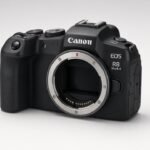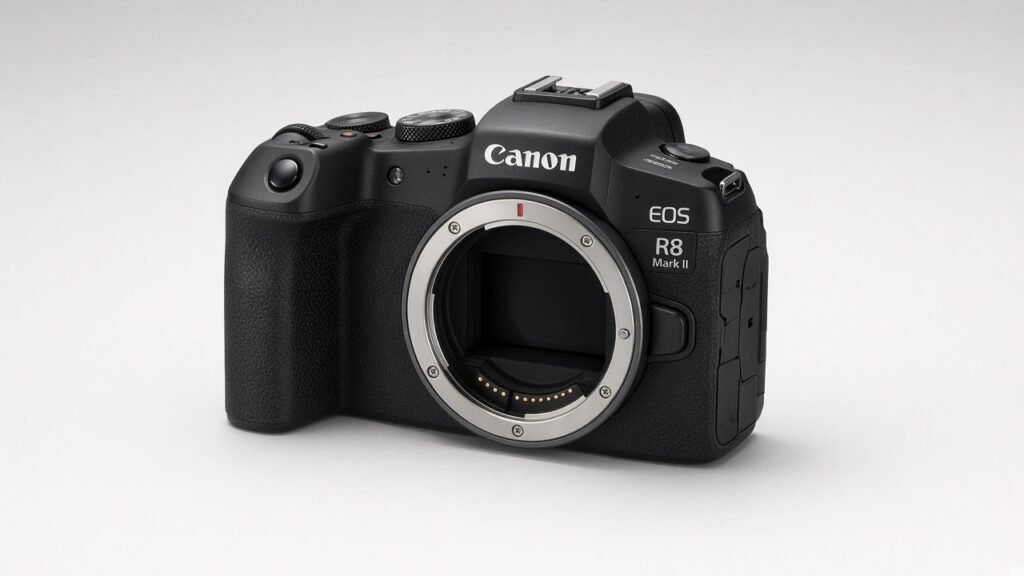
Canon just put the EOS R8 Mark II on store shelves, and it’s one of the more interesting camera releases of the fall for anyone who shoots people. Canon is calling it its smallest and lightest full-frame mirrorless body with in-body stabilization, and as of this week it’s in stock at Canon USA and the big retailers at $1,899 body-only or $2,099 with the RF 24-50mm kit lens. Here’s what’s new, what it means for event and headshot work, and what it means for you if you’re booking a photographer in San Antonio.
What’s new in the Canon EOS R8 Mark II
On paper, the R8 Mark II keeps the same 24.2-megapixel full-frame sensor as the original R8, but Canon changed a lot around it:
- In-body image stabilization (IBIS). The original R8 didn’t have it. The Mark II is rated up to 7.5 stops at the center of the frame, which makes slower shutter speeds much more forgiving when you’re hand-holding.
- 40 fps electronic shutter with pre-capture. It can start buffering RAW frames before you fully press the shutter, so you’re less likely to miss the moment, and Canon says the buffer holds noticeably more RAW and JPEG shots than the first R8.
- A rear joystick. A small thing that matters a lot when you’re moving your focus point quickly during a live event.
- Dual Pixel CMOS AF II with people, animal, and vehicle detection, plus a “registered people” priority mode that can favor specific faces.
- Video upgrades including 4K 60p oversampled from 6K, Canon Log 3, a tally lamp, and USB-C livestreaming.
- Weight around 546 g with battery and card, so it’s easy to carry all day.
Early reviews have been positive overall. The trade-offs reviewers keep pointing out are a single SD card slot, no mechanical shutter (electronic and electronic first-curtain only), and short battery life by Canon’s own rating.
Why event photographers should pay attention
Event work is mostly about light you don’t control: ballrooms, conference halls, and evening receptions where you’re fighting for every bit of shutter speed. Stabilization in the body means even small, inexpensive RF primes without built-in stabilization become usable at slower shutter speeds for still subjects like speakers at a podium or room details. Pre-capture is genuinely useful for handshakes, award handoffs, and candid laughs that last a fraction of a second.
The single card slot is the big caution for paid work. When a client’s event can’t be reshot, a lot of working photographers (us included) want a second slot writing a backup at the same time. That makes the R8 Mark II a great second body or a strong first full-frame camera, but if it’s your only body at a wedding or summit, have a solid card-handling routine and plenty of spare batteries.
What it means for headshots
For headshots, 24 megapixels is plenty for LinkedIn, company websites, and print up to typical sizes, and it keeps file sizes manageable when you’re processing a long line of people in one session. The improved eye and face detection helps keep focus locked on the near eye at wider apertures, which is where headshots live or die. Canon’s new Filmtone color filters are fun, but for consistent professional headshots you’ll still want to shoot RAW and handle color in editing so every person in a group set matches.
Practical takeaways if you’re hiring a photographer
- Gear helps, but process matters more. Ask your photographer how they back up images during and after the event, not just what camera they use.
- Lighting is still king for headshots. A newer camera won’t replace good off-camera light and a consistent background, especially for team or conference headshots that need to match.
- Faster cameras mean fewer missed moments. Features like pre-capture make it easier to catch the real expression at networking events, speeches, and award presentations.
- Turnaround comes from workflow. Culling and editing tools matter as much as the camera when you need a gallery delivered quickly after an event.
The Grey Bug take
The Canon EOS R8 Mark II looks like a smart, affordable way into full-frame for photographers who shoot people, and the added stabilization and pre-capture fix the two things many of us wished the original R8 had. For professional event coverage, we’d pair it with a dual-slot body or a careful backup routine. Either way, it’s a good sign for anyone hiring an event or headshot photographer: the tools keep getting better at catching real moments in tough light.
Planning a conference, corporate event, or team headshot day in San Antonio? See our event photography and headshot photography services, or reach out to Grey Bug Photography and let’s talk about what you need.
Source: Canon’s official EOS R8 Mark II announcement and product pages, plus current U.S. retailer listings as of late October 2026.