Most people only ever see one photo from a portrait session: the one that made the cut. This week, a photographer did something rare. He showed everything.
Ethan Pines, the photographer behind the 2014 Forbes cover of Theranos founder Elizabeth Holmes, shared the complete, unedited shoot online for the first time. That cover became one of the most recognizable business portraits of the last decade after Theranos collapsed, and it has been revisited again with a new documentary. Seeing every frame behind it is a great lesson for anyone booking headshots or a team portrait day.
What the photographer shared
In a post on LinkedIn (also covered by Business Insider and PetaPixel), Pines posted all of the frames from the gray-background setup, unedited. A few details stood out:
- 221 frames for one cover. That’s how many shots he made of her on the gray background. One of them became the cover.
- The prop was a team decision. People have long asked whether he forced her to hold the now-famous little blood vial. He says it was a collaboration. He wanted her to hold something that represented the company, a real blood sample wasn’t possible, and the company had sample “nanotainers” filled with fake blood on hand.
- Options, not one take. She holds the vial in 52 of the 221 frames. The rest are without it, which gave the editors real choices.
Whatever you think of the story behind it, the contact sheet itself is a great look at how a professional portrait actually gets made.
Lesson 1: A great portrait is a series, not a single click
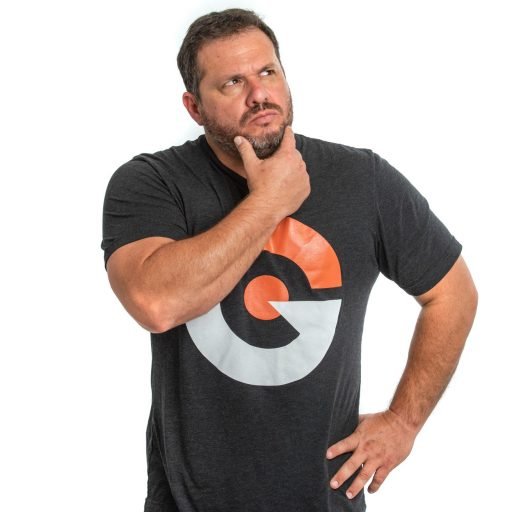
A cover-worthy portrait almost never happens on the first frame. Expressions warm up, shoulders relax, and small changes in head angle and chin position make a big difference. That’s why a headshot session with a pro involves a lot of clicks. It isn’t wasted effort. It’s how we find the frame where you look like the best, most natural version of yourself.
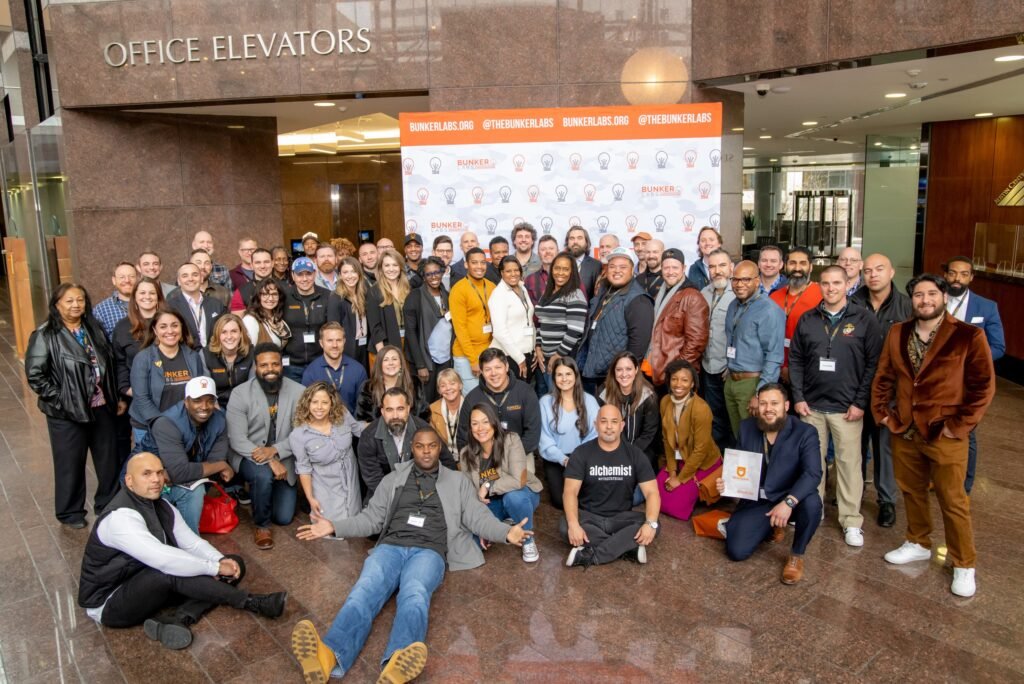
The same is true for group photos like the one above. With 40 or so people in a frame, someone is always blinking or looking away. Shooting a short burst of frames is the only reliable way to get one where everyone looks great.
Lesson 2: Props and concepts should be a conversation
The vial in that cover was planned between the photographer and the client. That’s how it should work. If you want your headshot or team photo to say something about your business, like a tool of your trade, your product or your workspace, bring it up before the session. A good photographer will help you decide whether it adds to the story or distracts from it, and will shoot versions with and without it so you can choose later.
Lesson 3: Give yourself choices
Having a version with the vial and a version without it gave Forbes options. Your business needs options too. A headshot for a law firm website, a LinkedIn profile and a conference speaker page may each call for a slightly different look. Ask for a few variations during your session: a serious version and a smiling one, jacket on and jacket off, a tight crop and a looser one with room for text.
Lesson 4: Selection and retouching are part of the craft
Out of 221 frames, the photographer and the magazine picked one. Choosing is a big part of the job. Strong portraits come from knowing which expression feels honest, which angle is most flattering, and which frame is technically sharp. Retouching should then polish that frame without changing who you are.
What this means for your San Antonio headshot or event session
Here’s how we put these lessons to work at Grey Bug Photography on headshot days, team portraits and event coverage across San Antonio:
- Plan the look ahead of time. Tell us where the photos will be used, and mention any props, logos or wardrobe ideas before the shoot, not during it.
- Expect lots of frames. We shoot more than we deliver on purpose, so you get real choices and natural expressions instead of one stiff pose.
- Ask for variety. Different expressions, crops and outfits now save you from needing a reshoot later.
- Trust the cull, but have a say. We narrow the set down to the strongest frames, and you choose your favorites from a private online gallery.
- Group shots need a plan too. For team and event group photos, we set the arrangement, then shoot several frames so everyone’s eyes are open in the keeper.
Our event and portrait work is shot on Nikon Z9 and Z8 bodies, which we’ve used since they launched. Their fast, reliable eye detection helps us keep every frame in a sequence sharp, so the final pick comes down to expression, not luck.
The bottom line
A famous magazine cover came from 221 frames, a planned prop and a careful edit. Your headshot works the same way, just on a smaller stage. When you see a pro taking lots of frames, that’s the process working.
Need professional headshots, a team portrait day or event coverage in San Antonio? Get in touch with Grey Bug Photography, or event planners can visit our planner page. Let’s make the frame that tells your story.