Almost every digital camera made in the last few decades sees color the same way: through a Bayer color filter, a tiny checkerboard of red, green and blue filters laid over the image sensor. This week, a piece of camera-sensor news suggested that design may finally have a challenger.
Metalenz, a company known for ultra-thin “metasurface” optics already used in phones, announced that it has acquired Israeli startup PxE Imaging. PetaPixel reported the deal on November 11. PxE’s technology, called the Holocoder, is designed to replace the Bayer filter entirely, and the companies say it can deliver about 2.5 times more light to a standard image sensor.
Here is what that means in plain language, and why it matters for anyone who hires a photographer for an evening event, a gala or a dimly lit venue in San Antonio.
The problem with the Bayer filter
A Bayer filter works by blocking light. Each pixel only gets one color, so the red pixels throw away green and blue light, the blue pixels throw away red and green, and so on. The camera then rebuilds a full-color image from that mosaic. According to Metalenz, a Bayer filter absorbs roughly 60 percent of the light coming into the sensor.
That lost light is a big reason low-light photos get noisy. Less light per pixel means the camera has to amplify the signal more (a higher ISO), and amplification brings grain, muddy shadows and weaker color. As Metalenz CEO Rob Devlin put it in an interview with WIRED, once information is lost by absorbing light, software cannot fully buy it back.
What the Holocoder does differently
Instead of filtering out colors, the Holocoder layer sits on the sensor and bends and sorts light by wavelength, so far less of it is wasted. The companies say it can also capture depth information along with color in a single image from one camera.
A few important caveats:
- It is not in a camera you can buy yet. PetaPixel reports the technology could reach the market as soon as the end of next year.
- Phones and small devices come first. The early targets mentioned are smartphones, machine vision and other places where tiny cameras need more light, such as autonomous vehicles.
- Real-world results are still unproven. “2.5 times more light” is the company’s claim. Independent tests will tell us how much cleaner the final photos actually look.
Why more light matters at real events
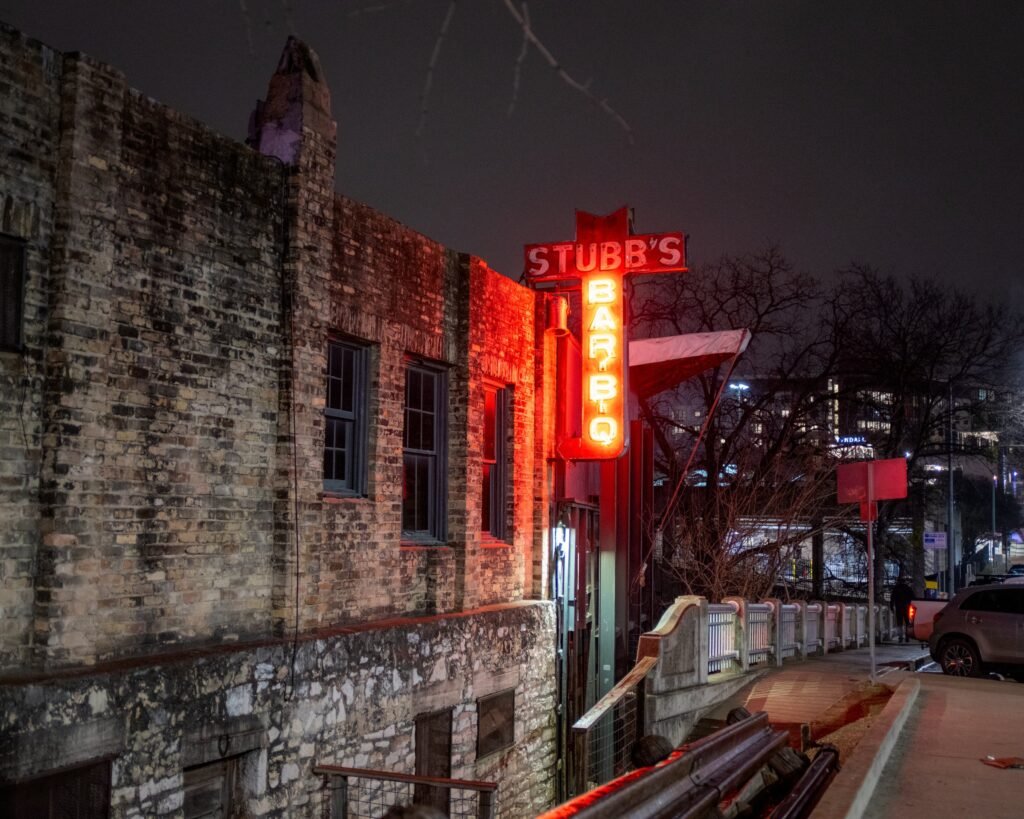
Most of the events we cover don’t happen in perfect light. Ballrooms, conference receptions, award dinners, church halls and downtown venues at night all push a camera hard. The photo at the top of this post is a good example: a neon sign on a historic brick building in downtown Austin, shot handheld on our Nikon Z9 at 1/30 second, f/2.8 and ISO 2000. The red neon, the texture in the brick and the city lights in the background all have to come from a small amount of available light.
Today, professional photographers solve that problem with three tools:
- Large full-frame sensors. A bigger sensor collects more total light than a phone sensor, which is why a Nikon Z8 or Z9 still beats a phone at a dim reception.
- Fast lenses. An f/2.8 zoom or an f/1.4 to f/1.8 prime lets in far more light than a phone lens or a slow kit zoom.
- Light we bring or shape. Bounce flash, a small off-camera light or simply placing people near the best light in the room still makes the biggest difference of all.
If sensor technology like the Holocoder eventually reaches full-frame cameras, it would stack on top of all three. Think cleaner shadows at the same ISO, richer color under mood lighting and fewer moments where a photographer has to choose between a slightly blurry photo and a noisy one.
What this means for event hosts and headshot clients
- Phone photos at your event will keep getting better. That is great for guests sharing moments, but it does not replace a photographer who knows how to read and shape light.
- Venue lighting still matters. If you are planning an evening event, ask your venue about house lights and uplighting. A brighter room helps every camera, from phones to pro bodies.
- For headshots, controlled light wins. Our headshot sessions use studio lighting, so sensor sensitivity is less of a factor than lighting setup, posing and expression. Better sensors help most in the unplanned, low-light moments of an event.
The low-light gear we rely on now
We have used the Nikon Z9 and Z8 since launch for events and headshots, and their full-frame sensors handle dim rooms well today. If you are a photographer looking at low-light gear that is available right now, these are good places to start:
- Buy the Nikon Z9 at Adorama (the body behind the photo above)
- See the Nikon Z8 at Adorama (Z9 image quality in a smaller body)
- See the NIKKOR Z 24-70mm f/2.8 S at Adorama (a fast, do-everything event zoom)
Disclosure: some links in this post are affiliate links, which means Grey Bug Photography may earn a small commission if you buy through them, at no extra cost to you.
The takeaway
The Bayer filter has been part of digital photography for a very long time, and the Holocoder is one of the most interesting attempts yet to move past it. It will likely show up in phones before pro cameras, and its real-world gains still need to be proven. But the goal is one every event photographer understands: get more of the light in the room onto the sensor, so the moments that happen after dark look as good as the ones that happen in daylight.
Sources: PetaPixel, “New Sensor Tech Could Replace Bayer Color Filter and Transform Mobile Photography,” November 11, 2026; Metalenz press release on its acquisition of PxE Imaging; Metalenz CEO Rob Devlin’s interview with WIRED, as reported by PetaPixel.
Planning an evening event, gala or conference in San Antonio or elsewhere in Texas? Reach out to Grey Bug Photography, or see how we work with planners on our For Planners page.