Nikon is celebrating one of the most overlooked parts of any camera: the viewfinder. A new special exhibition called Secrets Behind the Viewfinder just opened at the Nikon Museum at the company’s headquarters in Tokyo, and PetaPixel took readers inside it on November 15. The exhibit runs through February 27, 2027.
We have shot events on Nikon for years and have used the Z9 and Z8 since they launched, so this one caught our eye. Here is what the exhibit covers, what Nikon says about its newest viewfinders, and why the viewfinder quietly decides whether your photographer catches the moment or misses it.
What is in the exhibit?
According to PetaPixel and Digital Camera Watch, the exhibit focuses on three main types of viewfinders:
- Rangefinder: you look through a separate window next to the lens, not through the lens itself.
- SLR and DSLR: a mirror bounces light from the lens up to an optical viewfinder, so you see the real scene through the glass.
- Mirrorless: a small high-resolution screen (an electronic viewfinder, or EVF) shows what the sensor sees.
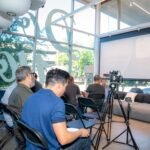
Visitors can read about each type in Japanese and English, look at viewfinder parts, and try all three at a triangular table set up so you can pick up each camera and compare them side by side. The museum’s project leader told PetaPixel that table is their favorite part. There are even take-home bookmarks with stories from Nikon’s viewfinder history.
What Nikon says about modern viewfinders
Nikon told PetaPixel that its goal has always been the same: a view that lets photographers concentrate fully on their subject. Early electronic viewfinders had narrow viewing angles, but newer OLED panels allowed better and more compact designs.
Nikon pointed to the Real-Live Viewfinder in the Z 9 as an example. Its dual-stream technology handles the recorded image and the live view separately and at the same time, so the view through the finder does not black out when the shutter fires. PetaPixel also called out the very sharp finder on the Z9 and the very bright one on the Z6 III as standouts.
Why this matters at an event
Look at the photo above. A musket volley lasts a split second: the flash, the smoke, the flag catching the wind. We made this frame in 2021 on a Nikon D850, a camera with a beautiful optical viewfinder. But on any DSLR the mirror flips up when the shutter fires, so for that instant the viewfinder goes dark. With practice you learn to time around it, and you trust that you got the shot.
With the Z9 and Z8, there is no blackout. We see the scene the whole time we are shooting a burst, which makes a real difference when things happen fast:
- Award handoffs and handshakes: we can follow the hand, the plaque and the smile in one continuous view.
- Speakers on stage: gestures and expressions change mid-sentence. Seeing every moment helps us pick the frame where the speaker looks engaged, not mid-blink.
- First dances, toasts and confetti: the peak lasts less than a second, and we do not want to be looking at a black screen when it happens.
- Dark ballrooms: an EVF shows the exposure before we press the shutter, so we can adjust right away instead of checking the back screen after every shot.
Optical viewfinders still have fans, and for good reason: you see the real light with no lag or battery drain. But for fast event work in mixed lighting, a modern blackout-free EVF is one of the biggest reasons we moved to mirrorless.
Tips if you are choosing a camera for events
- Try the viewfinder before you buy. Brightness, sharpness and eye comfort vary a lot from model to model, just like the side-by-side table at the Nikon exhibit shows.
- Check for blackout-free shooting. If you photograph action or live moments, a finder that stays live during bursts helps you follow the action.
- Do not ignore the eyecup. A good eyecup blocks stray light from stage lights and windows, and it makes long event days more comfortable, especially if you wear glasses.
- Set the diopter. The small dial next to the viewfinder adjusts focus for your eyes. If the menus look soft, start there.
Gear mentioned in this post
- Shop the Nikon Z9 at Adorama
- Shop the Nikon Z8 at Adorama
- Shop the Nikon Z6III at Adorama
- Shop the Nikon Z 70-200mm f/2.8 VR S at Adorama
- Browse Nikon eyecups at Adorama
Disclosure: some links in this post are affiliate links, which means Grey Bug Photography may earn a small commission if you buy through them, at no extra cost to you.
What this means for event clients in San Antonio
- More real moments: continuous viewing helps us catch the peak of a toast, an award or a performance instead of the frame just before or after.
- Better exposure in tricky light: we see the exposure as we shoot, which helps in dim ballrooms and stage lighting.
- Quieter coverage: the Z9 and Z8 can shoot silently, so we can work during speeches and ceremonies without a clicking shutter.
The takeaway
A viewfinder is easy to forget because it simply works, but it shapes every photo we take. Nikon’s new exhibit is a nice reminder of how far viewfinders have come, from rangefinder windows to mirrors to today’s blackout-free screens. For event photography, where the best moments do not repeat, that progress shows up directly in the gallery.
Sources: PetaPixel, “Inside Nikon’s New Exhibit Celebrating the Art and Evolution of the Viewfinder” (November 15, 2026), with reporting from Digital Camera Watch, and comments from Nikon and the Nikon Museum.
Planning an event, conference or team headshots in San Antonio or anywhere in Texas? Reach out to Grey Bug Photography, or see how we work with planners on our For Planners page.