Some of the most useful lighting gear is also some of the most overlooked. This week on Fstoppers, Lee Morris made the case that every photographer and videographer should own an optical snoot, a focusing light attachment that projects crisp shapes and patterns onto a wall or backdrop. He picked up a budget DigitalFoto FS-100S for about 108 USD to light the art on a dark wall behind his desk and came away impressed. A few years ago these tools cost far more, so his point is that they are now cheap enough to just keep in the bag.
We shoot events and headshots around San Antonio, and we agree: controlling exactly where light lands is what separates a flat photo from one that looks designed. Here is what an optical snoot does, what Morris liked and did not like, and how we would actually use one on event and headshot jobs.
What an optical snoot is (and why cardboard does not work)
A regular snoot is just a tube that narrows your light into a tight circle. An optical snoot, sometimes called an optical spot or projection attachment, adds a lens. You slide a small metal or glass pattern, called a gobo, into the unit, then use the focusing ring to project that pattern sharply onto the background.
Morris notes that holding a cardboard cutout in front of a light does not give the same result. Without a lens focused on the cutout, the shape turns into a soft, vague blob. The lens is what makes window-light shadows, crisp circles, stripes or even a logo look clean.
What Morris liked about the budget model
- Bowens mount, so it fits many studio strobes and LED lights that use that common mount.
- Gels and a large set of metal gobos come in the box, so you can try many patterns and colors right away.
- A rotating head lets you line up the projected shape exactly where you want it on the wall.
- A focus ring moves the pattern from razor sharp to soft and dreamy.
- A two-gobo holder keeps a second pattern parked and cooling while the first is in use. Metal gobos get very hot, so this lets you swap patterns without shutting everything down and waiting.
His one complaint: it cannot zoom. To make the projection bigger or smaller, you have to move the light. For one wall that is fine. If you will use it constantly, he suggests looking at pricier options with zoom or interchangeable lenses, such as the Westcott Optical Spot or Godox projection attachments. He uses his with a continuous light, but it works with flash too, as long as the head has a Bowens mount.
How we would use an optical snoot on event and headshot jobs
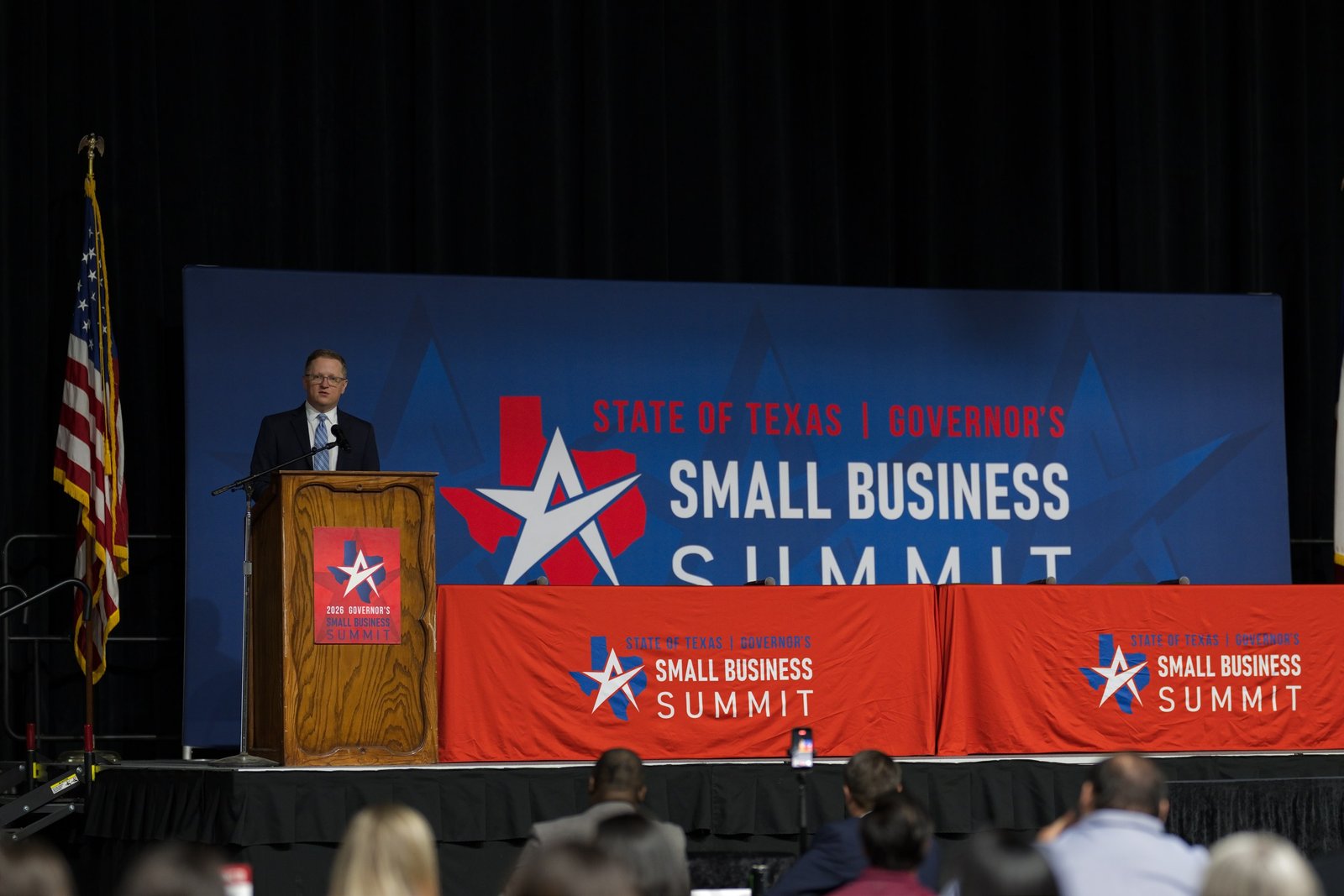
Look at the stage photo at the top of this post. The light on the podium and backdrop is what makes the frame work, and the black drape around it simply disappears. That same idea, putting light only where you want the eye to go, is exactly what an optical snoot is built for.
- Headshot backgrounds with personality. A soft window pattern or a gentle pool of light on a gray backdrop adds depth to a corporate headshot without looking gimmicky. It is also a great way to give a team a consistent but less boring look.
- A brand touch at events. With a custom gobo, a company logo or event name can be projected onto a wall for a step-and-repeat area, a photo booth or a sponsor corner. Plan this early, because custom gobos take time to make.
- Accent light for details. Centerpieces, awards, signage and product displays look far better with a small, controlled spot than with flat room light.
- Interview and video sets. Like Morris, many of our clients record from offices with dark walls. A projected pattern or glow behind the speaker separates them from the background and makes a simple setup look produced.
Tips before you buy or try one
- Check the mount and power. Make sure the unit fits your light. Bowens is common, but adapters add weight and can sag on a stand.
- Use a strong light. Optical snoots lose a lot of light through the lens and the small gobo. In a bright ballroom, a weak light will barely show.
- Mind the heat. Gobos and the barrel can get hot with continuous lights. Wear gloves to swap patterns and keep the unit away from guests and decor.
- Distance sets the size. Without zoom, plan room to move the light back and forth. Measure the wall or backdrop area you want to fill ahead of time.
- Keep it subtle for headshots. The pattern should support the person, not compete with them. Lower the power and soften the focus until it reads as mood, not a design pattern.
- Protect it in transit. The lens and gobo set are delicate. A padded case helps, as we covered in our Pelican vs YETI hard case drop test.
If you are still building your lighting kit, our step-by-step guide to high-speed sync flash for outdoor portraits in full sun covers another way to take control of light on location.
Where to buy
Prices and stock change often, especially around Black Friday, so check current listings before you buy:
- Buy at Adorama: Westcott Optical Spot projection attachment
- Buy at Adorama: Godox projection attachments
- Shop at Adorama: Bowens-mount optical snoots
- Buy at Adorama: NIKKOR Z 135mm f/1.8 S Plena (the lens we used for the stage photo above)
Disclosure: some links in this post are affiliate links, and Grey Bug Photography may earn a small commission if you buy through them, at no extra cost to you.
The takeaway
An optical snoot will not replace good main light, but it is one of the cheapest ways to make a backdrop, a stage or a headshot set look intentional. Now that budget models perform this well, it is worth trying one. And if you would rather have someone else handle the lighting, that is what we do.
Source: Fstoppers, “Every Photographer/Videographer Needs An Optical Snoot,” Lee Morris, November 26, 2026.
Planning a conference, gala or team headshot day in San Antonio? See our event photography and headshot photography pages, browse our services, or contact Grey Bug Photography, a small veteran-owned business.