Sigma just added an interesting twist to the most common lens in photography. Last week the company announced the Sigma 50mm F1.4 CL DG | Contemporary, the first lens in what it calls a “new lineage” of compact primes inside its I Series. The big idea is not more sharpness. It is character: softer, smoother rendering and a classic look, packed into a small metal body. For anyone who books portraits or headshots, that is a trend worth understanding.
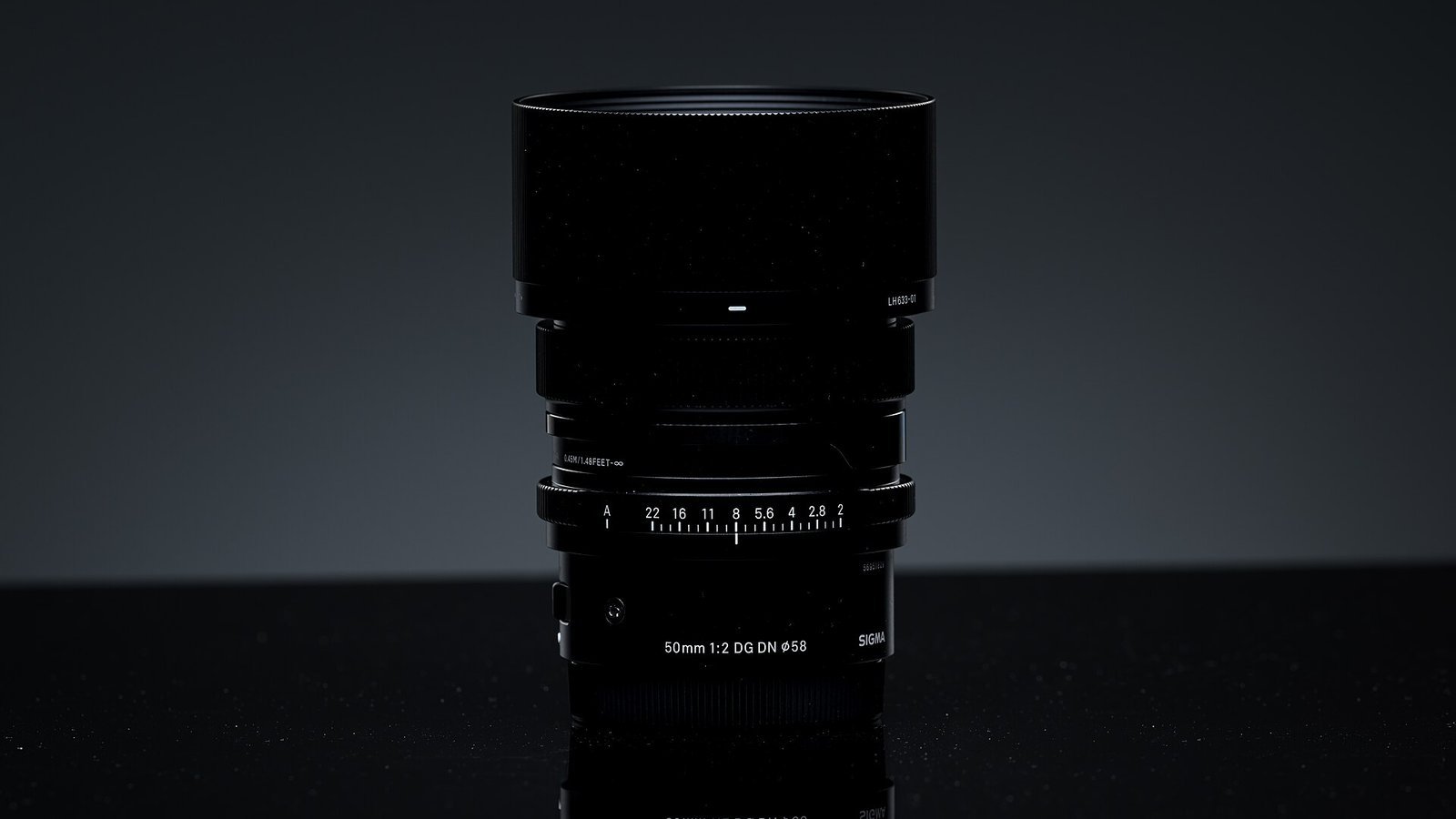
What Sigma announced
According to Sigma’s announcement as published by DPReview and PetaPixel’s coverage, here are the key points:
- A “character” lens on purpose. Sigma says the lens trades clinical, edge-to-edge perfection for rich, textured rendering, smooth tonal gradation, and soft background blur that falls off gradually instead of harshly.
- Small and all-metal. It follows the I Series design, with an aluminum body, focus and aperture rings, a knurled hood, a magnetic lens cap, distance markings, and a depth-of-field scale like older manual lenses.
- A new autofocus motor. Sigma’s new RDD (Rotary Direct Drive) actuator wraps linear-motor parts around the barrel so the lens can stay slim and still focus quickly.
- Manual override without a switch. Turn the focus ring during autofocus and the lens briefly hands control to you, then goes back to autofocus when you let go.
- Dust- and splash-resistant (not waterproof).
- Mounts and timing. Sony E-mount and L-Mount only, expected in early spring 2027. PetaPixel notes this is essentially a development announcement, so the final price and ship date have not been set.
Why “character” lenses are having a moment
For the last decade, lens makers raced to make every new prime sharper than the last. Modern cameras and lenses are now so sharp that many photographers, and many clients, are asking for something a little gentler. That is why you see so many retro-styled cameras and lenses lately. Sigma is betting that a 50mm f/1.4 with a softer, more film-like look will appeal to people who want portraits that feel warm and natural rather than hyper-detailed.
What this means for headshots and portraits
If you are booking headshots or portraits in San Antonio, you do not need to know lens model numbers. But the look of the lens your photographer chooses does show up in your photos. A few practical takeaways:
- Corporate headshots usually want crisp eyes. For LinkedIn, company websites, and conference speaker bios, clients usually want sharp, clean detail on the face and a neat, simple background. A clinical, sharp lens is often the right tool here.
- Personal branding and lifestyle portraits can benefit from character. For a softer, more editorial feel, like a creative entrepreneur, an author photo, or a family session, smoother rendering and creamy background blur can be very flattering.
- 50mm is a “people” focal length. On a full-frame camera, a 50mm works well for half-body portraits and environmental shots that show you in your office, shop, or studio. For tight head-and-shoulders headshots, many photographers move to longer lenses, around 85mm to 135mm, for more flattering proportions.
- Ask to see the style, not the gear. The best question for any photographer is “Can I see examples of the look you will give me?” Gear supports a style. It does not replace one.
What it means for event photography
Small, fast primes have a real place at events. A compact 50mm f/1.4 is easy to carry all night, handles dim ballrooms and evening receptions well, and looks less intimidating than a big pro zoom when you are photographing people networking. The trade-off is flexibility: at a busy summit or gala, a zoom lets the photographer go from a wide room shot to a speaker at the podium without moving. That is why most event pros carry both.
Will Grey Bug be using it?
Not right away. Grey Bug Photography shoots on Nikon Z9 and Z8 bodies, and this lens is announced only for Sony E and L-Mount. Still, it is a good sign for photographers on every system. When one lens maker leans into character and compact size, others tend to follow. Sigma also just announced its first zoom lens for Nikon Z-mount, so we will be watching to see whether more of its lineup, and this design idea, comes our way.
The bottom line
The Sigma 50mm F1.4 CL DG shows where portrait lenses may be heading: smaller, nicer to handle, and tuned for a pleasing look rather than test-chart scores. For clients, the lesson is simple. Talk with your photographer about the feel you want, whether that is crisp and corporate or soft and editorial, and they will choose the right tools to get there.
Planning headshots, a team photo day, or event coverage in San Antonio? Reach out to Grey Bug Photography and tell us the look you are after.