Every November, National Geographic picks the photos that defined its year, and the 2026 collection just came out. The magazine chose 25 images from more than a million frames its photographers made around the world. Most of us will never dive under Greenland sea ice or wait nine months for a rare animal behavior. But the habits behind these pictures are the same habits that make a conference, gala, or company celebration in San Antonio look like a story instead of a stack of snapshots.
What National Geographic picked this year
As PetaPixel and USA Today report, the 2026 Pictures of the Year include the first images of moray eels spawning in the wild, made by Tony Wu after nine months in the field in Japan; climber Chris Sharma hanging from a sea cliff in Spain just after a total solar eclipse; a Greenland shark swimming under thick sea ice, photographed by Kiliii Yüyan in water below freezing; golden langurs peering into a fisheye lens on a pole; and the Tribute in Light over New York City, marking 25 years since 9/11. The collection also runs in the magazine’s December issue.
National Geographic’s editor-in-chief, Nathan Lump, put it simply: documenting what is real is more valuable than ever at a time when fakes are everywhere. That idea matters a lot to anyone hiring a photographer right now.
Five lessons event photographers can borrow
1. Patience and preparation win the frame
Tony Wu’s eel photo took months of returning to the same place. At events, the same principle applies on a smaller scale. We walk the venue early, learn the run of show, and know when the award is handed over or the CEO steps to the podium. The best moment usually goes to the photographer who was already in position.
2. Show the place, not just the people
Several of this year’s picks are wide frames where the setting is half the story, like the solar observatory in Peru or China’s salt lake. Event galleries need that too: a wide shot of the ballroom, the stage with the banner, the crowd from the back of the room. Those establishing photos are the ones clients reach for when they promote next year’s event.
3. Give the viewer a sense of scale
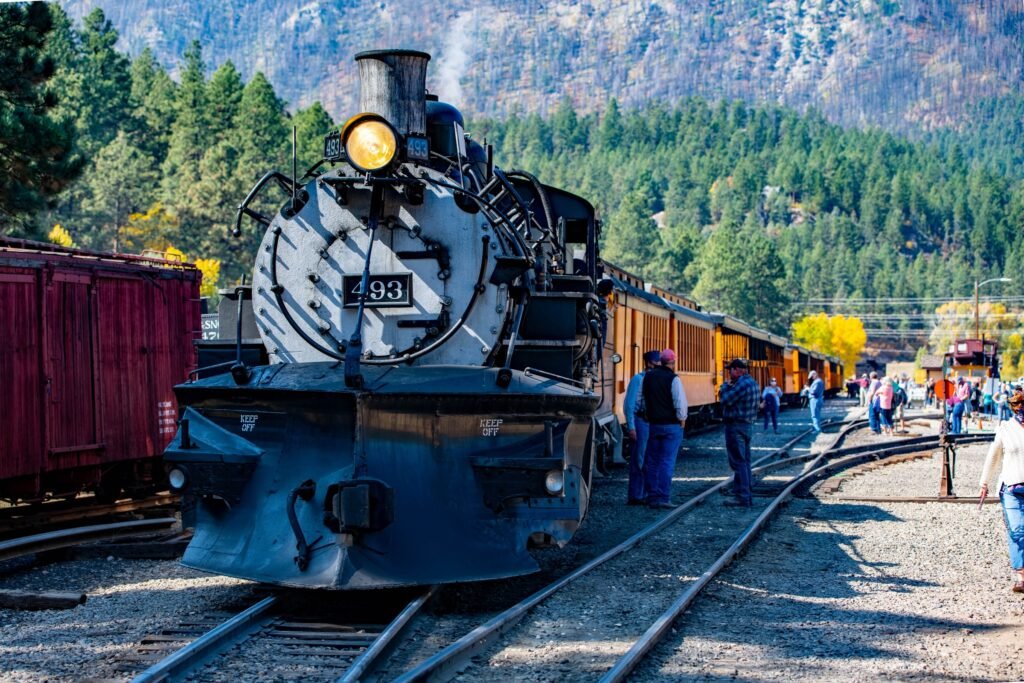
The climber on the cliff and the diver beside the shark make those scenes readable. In the photo at the top, the travelers beside the train do the same job: they tell you how big the locomotive is without a word. At an event, one person in front of a giant screen or a packed hall seen from the balcony gives the same feeling of size and energy.
4. Try one unusual angle
Prakash Matada put a fisheye lens on a pole to get close to the langurs. You do not need anything that extreme, but a high angle from a stairway, a low angle at the stage edge, or a shot through decorations can make an ordinary moment memorable. We aim for at least a few of these at every event, without getting in the way of guests.
5. Real moments beat staged perfection
These photos are celebrated because they actually happened. For event hosts, that is the whole point of hiring a photographer: real speakers, real attendees, real reactions. It is also why it pays to let guests enjoy the moment rather than watching it through their phones, and leave the coverage to someone whose job is to catch it.
About the photo at the top
This is not an event photo, and that is on purpose. It is from a trip through Colorado’s San Juan Mountains, made on a Nikon D850 with a 70-200mm f/2.8 at 70mm. The locomotive is the subject, the passenger cars lead your eye into the frame, the travelers give scale, and the pine-covered hills tell you where you are. That is the same subject, context, and scale formula we use when we cover a summit or gala. Today Grey Bug Photography shoots on the Nikon Z9 and Z8, which we have used since they launched, and if you are curious about the older body, we shared our take on whether the D850 is still worth it in 2026.
What event hosts can ask for
- A few wide establishing shots of the venue, before guests arrive and once the room is full.
- Coverage of the key moments on the schedule, with the photographer in position ahead of time.
- Some photos that show scale, like the full room or the crowd in front of the stage.
- Real, unposed moments alongside the group photos and headshots.
The takeaway
National Geographic’s best photos of 2026 come from patience, a clear sense of place, a human touch for scale, and a willingness to try a different angle. None of that needs an expedition. It works just as well in a hotel ballroom or a conference center downtown. You can see the full collection on National Geographic’s photography page.
Sources: PetaPixel, November 18, 2026; USA Today, November 17, 2026.
Planning a conference, gala, or company event in San Antonio or anywhere in Texas? See our event photography and headshot photography pages, or contact Grey Bug Photography to talk through the story you want your photos to tell.