If you shoot with a Nikon Z50II, Z30 or Z fc, there is a new lens worth a look. Tamron’s 16-50mm F2.8 A (Model B091) went on sale in Nikon Z mount on November 19, and photography sites like PhotographyTalk have been calling it a cheaper way for Nikon DX shooters to get a fast, constant f/2.8 standard zoom.
We shoot San Antonio events and headshots on full-frame Nikon Z9 and Z8 bodies, so this lens is not going in our bag. But a lot of people who read this blog are marketing staff, business owners and new photographers who carry a smaller Nikon to document their own events. For them, this is one of the more useful lens releases of the year, and it is a good excuse to talk about why f/2.8 zooms matter at events.
What Tamron announced
Here are the basics, based on Tamron’s announcement and coverage from PhotographyTalk, Nikon Rumors and DPReview:
- Range: 16-50mm, which works out to about 24-75mm on a Nikon DX body. That is the classic “do almost everything” event range.
- Aperture: f/2.8 all the way through the zoom, so you do not lose light when you zoom in.
- Price: a list price of $549 for the Nikon Z version. Nikon’s own Z DX 16-50mm f/2.8 VR sells for around $900.
- Size: about 315 g and 81.6 mm long, with a 55 mm filter thread.
- Focus: Tamron’s VXD linear motor, which DPReview found quick and quiet. It focuses as close as about 6 inches at the wide end.
- No stabilization: there is no image stabilization in the lens. Nikon’s version has VR.
- Nikon-licensed: DPReview pointed out it is unusual for Nikon to license a third-party lens that competes so directly with one of its own.
DPReview’s hands-on review was done with the Canon RF version, not the Nikon one, but it called the lens a significant step up from most kit zooms, with good detail even in the corners.
Why f/2.8 matters at events
Most cameras come with a kit zoom that gets darker as you zoom in, often ending around f/6.3. That is fine outdoors at noon. It is a struggle in a hotel ballroom, a conference room with mixed lighting, or a holiday party after sunset.
An f/2.8 lens lets in twice as much light as an f/4 lens and roughly five times as much as an f/6.3 lens. In real terms, that means:
- Faster shutter speeds, so speakers who talk with their hands and people walking across a stage stay sharp.
- Lower ISO, which keeps images cleaner. We explained why in our post on why ISO does not actually create noise.
- Better autofocus in dim rooms, because the camera has more light to work with.
- Softer backgrounds for quick portraits and detail shots, which helps cut clutter like exit signs and stacked chairs.
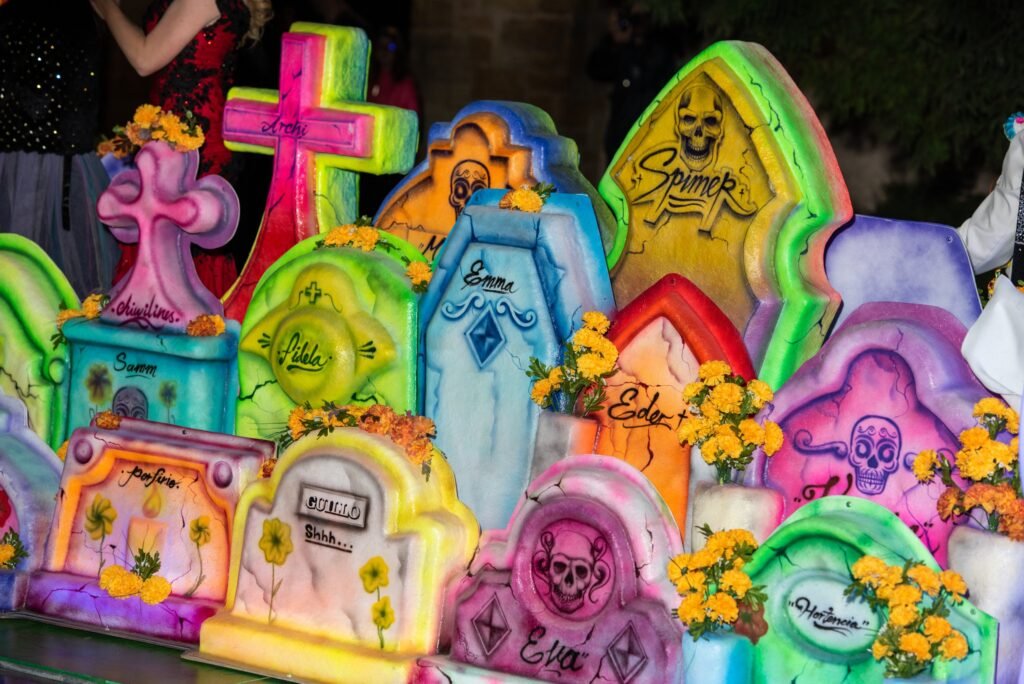
The photo at the top is a good example of the kind of scene that pushes a lens: a colorful parade float photographed after dark. It was shot at ISO 800 with a fast telephoto zoom. A slower lens would have meant a higher ISO, a slower shutter, or both.
Tamron or Nikon: which DX zoom makes sense?
The biggest difference is stabilization. Nikon’s DX bodies such as the Z50II, Z30 and Z fc do not have stabilization built into the camera, so with the Tamron you will rely on shutter speed alone to avoid shake.
- Choose the Tamron if you mostly shoot stills, want f/2.8 for less money, and are comfortable keeping your shutter at about 1/100 sec or faster indoors.
- Choose the Nikon VR if you shoot a lot of handheld video, like walk-and-talk clips or venue tours, where stabilization makes footage much smoother.
- Either way, you are getting a much more capable lens than a typical kit zoom for indoor events.
What we use for events and headshots
On our Nikon Z9 and Z8, a full-frame 24-70mm f/2.8 zoom covers most of an event, from wide room shots to stage moments and candid networking. For headshots we use longer focal lengths and controlled lighting, because that gives the most flattering, consistent look from person to person. The Tamron gives DX shooters a similar 24-75mm view, which is why it is such a practical everyday lens.
If you are thinking about stepping up to full frame instead, we wrote about the Nikon Z8 Black Friday price cut, and about where a fast prime like the Voigtländer NOKTON 35mm f/1.2 fits at events.
Tips if you are photographing your own event
- Start at f/2.8 indoors, set your shutter to at least 1/125 sec for people who are moving, and let auto ISO handle the rest.
- Use 16mm for the room and group shots, then zoom to 50mm for speakers and details. Avoid putting people’s faces at the very edge of a wide frame, where they can look stretched.
- Get closer instead of cropping later. The lens focuses close, so use it for name badges, table settings and décor.
- Bring a spare battery and a second card. A new lens will not save a full card at the keynote.
Gear mentioned in this post
- Tamron 16-50mm F2.8 A for Nikon Z (DX): Buy at Adorama
- Nikon NIKKOR Z DX 16-50mm f/2.8 VR, the stabilized alternative: Buy at Adorama
- NIKKOR Z 24-70mm f/2.8 S II, the full-frame standard zoom for Z9 and Z8 users: Buy at Adorama
Disclosure: some links in this post are affiliate links, which means Grey Bug Photography may earn a small commission if you buy through them, at no extra cost to you.
The takeaway
Tamron’s 16-50mm F2.8 gives Nikon DX shooters a light, fast standard zoom at a much lower price than Nikon’s own version. If you document your own company events, it is one of the simplest upgrades you can make. And when the event is too important to leave to a kit lens and a busy staff member, that is where a professional event photographer comes in.
Sources: Nikon Rumors, November 19, 2026; PhotographyTalk, November 20, 2026; Tamron press release via DPReview, October 14, 2026; DPReview news, October 14, 2026; DPReview review, October 27, 2026.
Planning a conference, gala or team headshot day in San Antonio? See our event photography and headshot photography pages, or contact Grey Bug Photography to talk about your date.